What is a residential proxy? Benefits, features, and use cases
Many companies work with large amounts of online data that must be collected, checked, and analyzed. For these tasks, they use different types of proxy servers based on the goal, traffic type, and technical requirements. In this article, we’ll explain what is a residential proxy, how it works, and where it may be used. A proxy uses an IP address assigned by an internet service provider to a real household connection. It can be used for data collection, geo-targeting, website testing, web scraping, price monitoring, and market research. This service is intended for lawful use in the United States in accordance with applicable regulations.
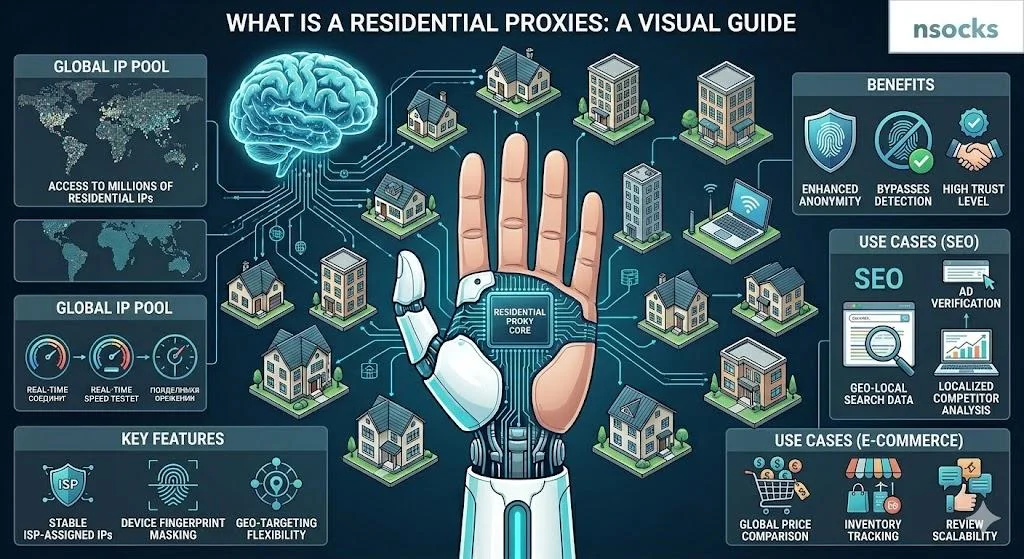
What is a residential proxy and how does it work?
To explain what is a residential proxy, it helps to start with its basic function. It acts as an intermediary server that replaces your device’s real IP address with an IP address associated with a home internet connection. This makes the request appear as if it comes from a regular user. Below is a comparison of proxies and data center proxies.
| Criteria | Residential proxies | Data center proxies |
|---|---|---|
| IP source | ISP-assigned IP address | Data center IP address |
| IP type | Home connection | Server-based connection |
| Speed | Medium | High |
| Cost | Slightly higher | Slightly lower |
| Trust level | High | Medium |
Keep these factors in mind when choosing a proxy server.
How residential IP addresses are assigned
Residential IP addresses are assigned to users by their internet service providers when they connect to the internet. This allows traffic to be routed correctly, since each connection receives an IP address that helps devices exchange data across the network. As a result, residential proxy can look more like regular household traffic than data center proxies.
Residential proxies vs data center proxies
To show the difference between these proxy types more clearly, the main criteria are listed below.
| Criteria | Residential proxies | Data center proxies |
|---|---|---|
| Real user IP address | Yes | No |
| Online reliability | High | Lower |
| Operating speed | Medium | High |
| Scalability | Medium and more complex | High and easier |
| Traffic appearance | Regular user traffic | Server traffic |
| Cost | More expensive | Cheaper |
| Geo-targeting | Strong fit | Less suitable because it may look less natural |
The table helps explain what is a residential proxy and why it is often considered more trustworthy than a data center proxy.
Static vs rotating residential proxies
There are two common types of proxies: static and rotating. Here’s how they differ:
- a static residential proxy uses the same IP address for an extended period. This option works well when a stable, continuous connection is important;
- a rotating proxy changes the IP address at set intervals or after each request. This option is often used for working with many web pages or larger data tasks.
A static residential proxy is usually a better fit when connection stability matters, while a rotating IPs are more suitable for broader tasks that involve multiple pages or requests.
Main benefits of residential proxies
Many companies choose residential proxies for several reasons:
- stronger trust signals, since the IP addresses are associated with real household connections;
- steadier access to websites, especially those that monitor unusual traffic patterns;
- localized access, which allows users to view region-specific content from a selected country or area;
- practical use for website testing, SEO tasks, and marketing monitoring.
These features make residential proxy a useful option for lawful online tasks that require stable access and location-based testing.
Better privacy and safer browsing
These proxies add a layer of privacy by masking your real IP address. Instead, the website sees an IP address associated with a regular user in the selected geo region, so the traffic appears more natural.
Improved access to localized content
These proxies can also support access to localized content. This makes it possible to view websites the way users in a selected region may see them. It is useful for checking regional pages, product prices, availability, and location-based ads.
More stable data collection and testing
Residential proxies can make data collection and testing more stable by reducing access issues across different regions. This is especially useful for price monitoring, market research, and checking multiple pages from different locations.
Common use cases for residential proxies
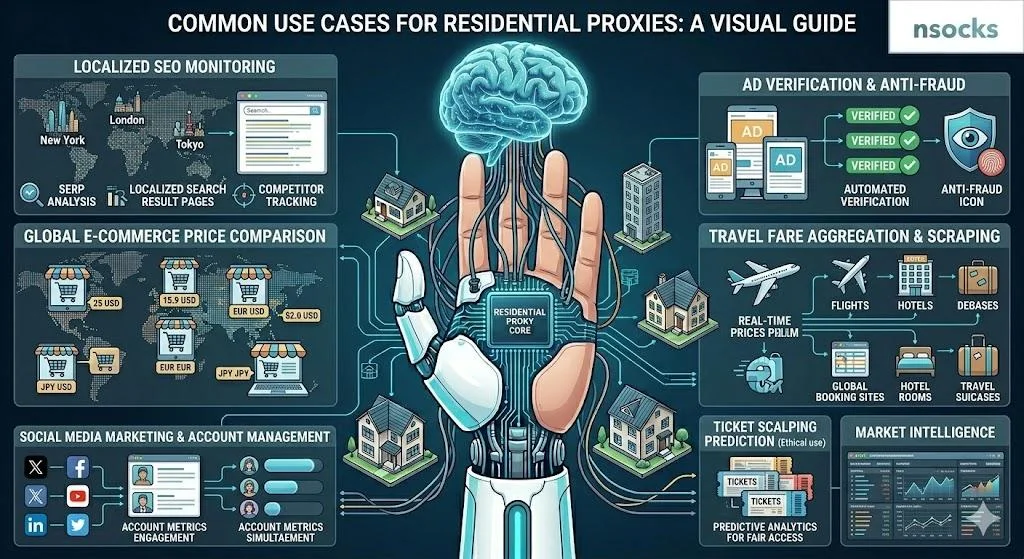
These servers are used across many business tasks where region-specific data is important. They help companies review information from selected markets and test how websites, prices, or ads appear in different locations. Below are common use cases for residential proxy.
SEO and marketing research
These servers are often used for tasks such as:
- monitoring product availability;
- analyzing competitors’ prices for services and products;
- collecting market data from different websites;
- studying product demand in a specific region;
- analyzing local search results.
💡 For monitoring and analytics, you need IP addresses from the region you are researching. Understanding what is a residential proxy helps explain why location-specific IP addresses matter for this type of work.
Website and app testing
Software teams often test websites and mobile apps from different locations. Proxy-based testing can help reveal:
- region-specific website versions;
- country-specific content;
- routing issues;
- loading speed differences across countries and regions.
💡 Testing a website from several countries can help uncover errors that may not appear when testing from only one region.
Brand protection and ad verification
Many companies use residential proxies to check how their brand and ads appear in different markets. These tasks may include:
- checking how ads are displayed;
- verifying geo-targeting accuracy;
- monitoring brand mentions;
- reviewing partner websites.
💡 Regular checks can help teams spot ad display issues sooner and make timely corrections.
Types of residential proxies
To better understand what is a residential proxy, it helps to compare the main types available.
| Types | Description |
|---|---|
| Rotating | The IP address changes automatically at set intervals. A rotating server is often used for data collection, monitoring, and research. |
| Static | The IP address stays the same. A static residential proxy is used for longer projects that require a stable connection. |
| Mobile | Uses IP addresses from mobile carriers and is often used for testing mobile content. |
💡 The right option depends on the task, location requirements, and how long the same IP address needs to remain active.
Rotating residential proxies
A rotating residential proxy changes its IP address at set intervals or after specific requests. Access to a larger IP pool can make this option useful for tasks that involve many pages, regions, or web resources.
Static residential proxies
A static residential proxy provides one fixed IP address for an extended period. This makes it useful for long-term tasks that require a stable connection, such as website testing or workflows where keeping the same IP address matters.
Mobile residential proxies
Mobile proxies use IP addresses from mobile network providers, typically through 3G, 4G, or 5G connections. They can be useful for testing mobile content, checking mobile ads, and reviewing how websites or apps appear to mobile users in different regions.
How to choose the right residential proxy provider
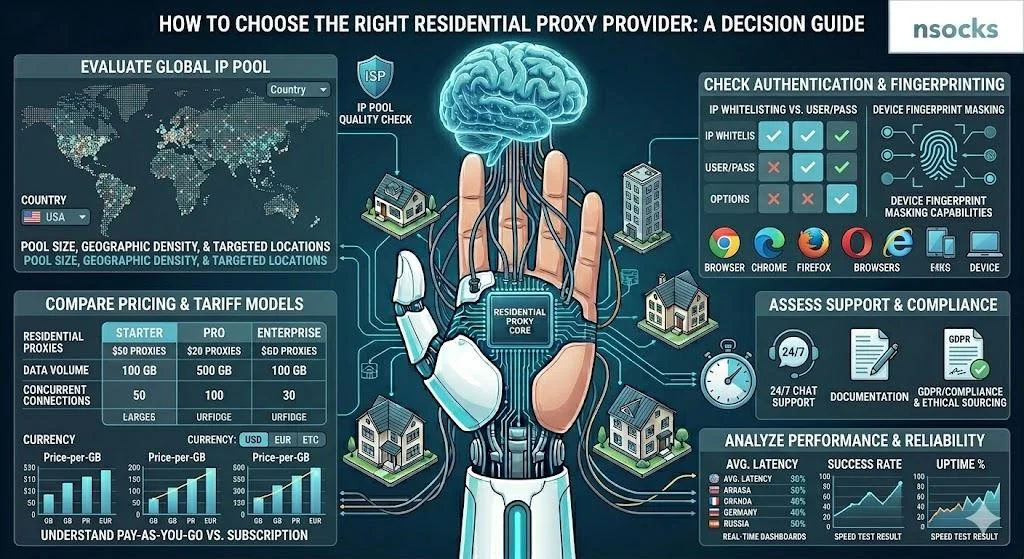
When choosing a residential proxy provider, it helps to compare the main factors that affect performance, coverage, and day-to-day use.
| Selection criteria | What to check |
|---|---|
| IP address geography | Whether the provider offers access to the countries or regions you need |
| Speed | Whether the connection is stable enough for your tasks |
| Scalability | Whether the service can support larger workloads if needed |
| Testing | Whether you can check proxy performance before committing |
| Cost | Whether the pricing is reasonable compared with similar options |
| Support | Whether customer support is responsive and easy to reach |
These criteria can help you choose a residential proxy service that fits your technical needs and legal use case.
Important features to compare
When comparing services, pay attention to features such as:
- IP address rotation;
- static IP addresses;
- added privacy;
- support for HTTP, HTTPS, and SOCKS5 protocols;
- flexible settings.
These features can affect how well the service fits your technical tasks and workflow.
Pricing and scalability
Pricing usually depends on traffic volume, the number of IP addresses, and regional coverage. A reliable provider should offer enough scalability to support larger workloads without making costs difficult to manage.
Customer support and usability
When using residential proxies, users may have questions or run into technical issues. This makes responsive customer support and a clear user interface important.
Now you know what is a residential proxy, how it is used, and which types are available. When choosing a provider, focus on lawful use, stable performance, session control, and the regions required for your tasks.
Frequently asked questions
Below are answers to common questions.
What is the difference between residential and data center proxies?
This type of proxy uses IP addresses associated with real household connections. Data center proxies use IP addresses from data centers, so websites may identify them as server-based traffic more easily.
Are residential proxies legal in the USA?
Yes, these proxies are legal in the U.S. by themselves, but legality depends on how the IP address was obtained and how the proxy is used.
What are residential proxies commonly used for?
They are commonly used for data collection, ad testing, SEO monitoring, account management, and geo-targeted testing.
Do residential proxies affect internet speed?
Yes, they can slightly reduce speed because traffic passes through an additional network point.
How do I choose a reliable residential proxy provider?
Check the IP address source, company reputation, network stability, geo availability, pricing, and customer support quality.