eSIM technology and its role in global privacy and connectivity
Mobile connectivity is going cardless. eSIM technology gives users software-based control over carrier profiles, bypassing the plastic SIM entirely. For anyone who values privacy-focused connectivity and global mobility, this shift is worth understanding.
📡 What eSIM technology actually is and how it works
Manufacturers solder an embedded chip directly into your device. This form of eSIM technology lets carrier profiles download remotely, no store, no tray, no pin tool.
ℹ️ eSIM definition: The tamper-resistant chip stores carrier credentials digitally. It follows the GSMA standard for cross-manufacturer compatibility. Multiple profiles can sit on one device at once.
| Feature | 📱 eSIM | 🔧 Physical SIM |
|---|---|---|
| Form factor | Built-in | Removable |
| Activation | Remote | In-store |
| Profiles | Multiple | One per card |
| Switching | Minutes | New card |
| Damage risk | None | Breakable |
| E-waste | Zero | Plastic |
💡 Carriers cut logistics, manufacturers gain space, users get instant activation.
🔗 Embedded connectivity and digital identity concept
Your embedded profile links secure mobile communication credentials to a software identity. Thanks to eSIM technology, card-based trust gives way to cryptographic verification tied to digital identity protection.
- 📲 Select a plan online
- 📧 Receive QR code
- 🔐 Device downloads encrypted profile
- ✅ Network authenticates
- 📶 Connection live
💡 Identity lives in software. Lose the phone, restore the profile on a new device.
ℹ️ Digital profile overview: Each profile holds an IMSI, auth keys, and carrier settings. Personal, work, and travel profiles run side by side.
⚙️ Device integration and network provisioning
Devices ship with embedded connectivity hardware built in. GSMA-standardized provisioning behind eSIM technology lets a phone bought in New York activate a Tokyo profile in minutes.
| Device type | eSIM support |
|---|---|
| 📱 Smartphones (iPhone 14+, Galaxy S23+) | Full native |
| ⌚ Smartwatches | Standalone cellular |
| 💻 Laptops (Surface Pro, ThinkPad) | Built-in LTE/5G |
| 📟 Tablets | Data-only |
| 🚗 Connected vehicles | Telematics |
🎰 Scenarios:
- 🌍 Local data plan before landing
- 💼 Separate work/personal numbers
- 🏠 Backup carrier for coverage
- 📡 Dedicated IoT connections
💡 Confirm your device is carrier-unlocked first. Some US carriers lock for 60 days.
🔄 Why eSIM is replacing traditional SIM cards
The SIM card shrank from credit-card size to nano over three decades. Embedded sim technology removes the card entirely.
✅ Advantages:
- ✅ No damage risk
- ✅ Instant switching
- ✅ Multiple profiles
- ✅ Less e-waste
- ✅ Encrypted secure network provisioning
❌ Limitations:
- ❌ Incomplete carrier support
- ❌ Older devices excluded
- ❌ Inconsistent transfers
- ❌ Slow regional adoption
| Era | Type | Change |
|---|---|---|
| 1991 | Full-size | First module |
| 2003 | Micro | Smaller |
| 2012 | Nano | Minimal |
| 2016+ | eSIM | No card |
💡 Apple killed the SIM tray on US iPhone 14. By 2028, over 6 billion embedded-SIM devices projected.
🔒 eSIM and its impact on global privacy
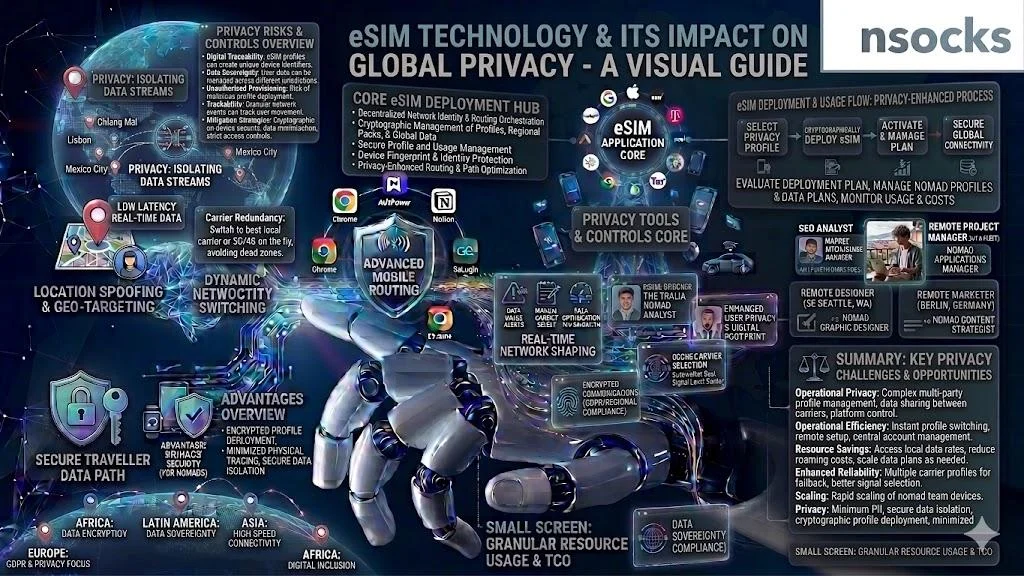
Physical SIMs can be cloned, intercepted, or swapped. eSIM privacy controls place the profile inside a tamper-resistant chip with multi-layer authentication.
ℹ️ Case study: SIM-swap fraud: SIM-swap attacks cost US consumers over $68 million in 2023 (FBI IC3). Attackers trick carriers into moving numbers to blank cards. The embedded chip blocks this. Transfers need device-level authentication and encrypted provisioning.
| Privacy factor | 📱 eSIM | 🔧 Physical SIM |
|---|---|---|
| SIM-swap risk | Low | High |
| Theft exposure | Encrypted | Removable |
| Remote kill | Instant | Card replacement |
| MFA provisioning | Standard | Rare |
| Data protection mobile networks | Built-in | Varies |
💡 You control what's active. Any profile can be killed in seconds.
🆔 How mobile identity is managed in eSIM systems
The subscriber identity is a cryptographic package in the device's secure enclave. Powered by eSIM technology, it holds authentication credentials, network permissions, and subscriber data.
ℹ️ Mobile identity basics: Each profile stores an IMSI and Ki (authentication key). The carrier encrypts them and delivers via SM-DP+ server. Full identity never travels in plaintext.
- 🏢 Carrier generates credentials
- 🔐 Encrypted upload to SM-DP+
- 📲 Device authenticates securely
- ⬇️ Profile downloads to eUICC
- 🔑 Local decryption, activation
💡 Enable 2FA on carrier accounts. Activate eSIM security features if available. Delete unused profiles.
🛡️ Data protection and user control over connectivity
Physical SIM means your connection rides on a removable card. With eSIM technology, authority shifts to the software level. The difference is practical.
✅ Control benefits:
- ✅ Remote deactivation if lost
- ✅ Carrier switch without new card
- ✅ Profiles per context
- ✅ Full connection visibility
❌ Gaps:
- ❌ Carrier data policies vary
- ❌ Portability restrictions
- ❌ No universal privacy audit
| Feature | eSIM | Traditional SIM |
|---|---|---|
| Remote lock | ✅ | ❌ |
| Instant switch | ✅ | ❌ |
| Encryption | ✅ Standard | ⚠️ Varies |
| User deactivation | ✅ Device | ❌ Call center |
💡 Treat profiles like passwords. Use travel-specific profiles. Seek carriers with encrypted mobile access.
🌐 eSIM and global connectivity advantages
Roaming is overpriced. Global connectivity eSIM lets you grab a local profile before the plane lands. Savings are immediate.
| Region | Roaming/GB | eSIM/GB | Savings |
|---|---|---|---|
| 🇪🇺 Europe | $12–$15 | $2–$5 | ~75% |
| 🇯🇵 Japan | $15–$20 | $3–$6 | ~70% |
| 🇧🇷 Brazil | $18–$25 | $4–$8 | ~68% |
| 🇦🇺 Australia | $10–$14 | $3–$5 | ~64% |
🎰 Advantages:
- 🌍 Local rates, 190+ countries
- ⚡ Under 5-minute activation
- 💵 No roaming surprises
- 📱 Home number stays active
- 🔄 Zero store visits
💡 Regional multi-country plans save more. Compare global connectivity infrastructure before choosing.
🔀 Seamless switching between networks
Network switching used to mean tray ejection and card swaps. eSIM technology makes it a single tap.
- 📱 Settings → Cellular
- 📋 View profiles
- 👆 Tap to activate
- 📶 Connected in seconds
ℹ️ Traveler case study: US consultant, LA → London → Berlin → Tokyo. Local plan downloaded before each leg. Total setup across three countries: under 15 minutes, 60% cheaper than carrier roaming.
💡 Download on WiFi before departure. Keep home profile inactive for WiFi calls.
💰 Cost efficiency and simplified roaming experience
US travelers lose hundreds on roaming fees yearly. eSIM technology gives direct access to local pricing.
| Scenario | Roaming | eSIM plan |
|---|---|---|
| 📧 1 week Europe (5GB) | $60–$75 | $12–$25 |
| 📹 2 weeks Asia (10GB) | $150–$200 | $20–$40 |
| 📞 1 month nomad (20GB) | $300+ | $35–$60 |
✅ Wins:
- ✅ No markup
- ✅ Local rates
- ✅ No hidden fees
- ✅ Instant changes
❌ Watch for:
- ❌ Activation fees
- ❌ Voice excluded on data plans
- ❌ Speed tier surcharges
💡 Compare three+ providers. Regional plans beat country-by-country for multi-stop trips.
⚠️ Challenges and limitations of eSIM technology
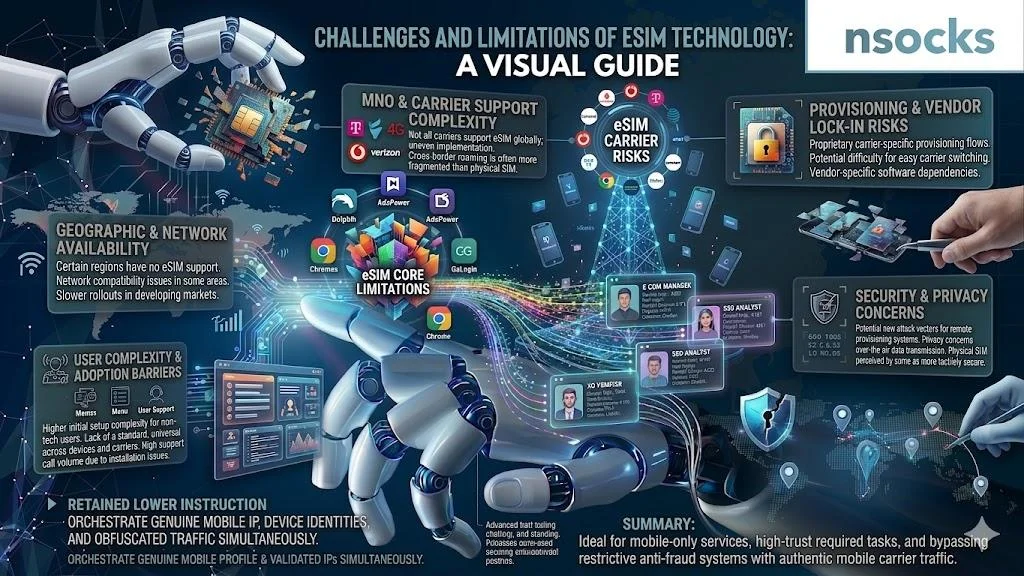
This standard faces real obstacles. Device support is growing but uneven. Carrier cooperation varies by market.
ℹ️ Current limitations: Adoption of eSIM technology reaches ~55% among US smartphones (2025). Globally ~35%. Many MVNOs lack infrastructure.
| Challenge | Status | Fix |
|---|---|---|
| 📱 Compatibility | ~55% US | Growing |
| 🏢 Carriers | Majors yes, MVNOs lag | GSMA push |
| 🔄 Transfers | Inconsistent | Protocols coming |
| 🌍 Regional gaps | US/EU strong | Investment ongoing |
| 📞 Voice | Not always | VoIP fallback |
💡 Download fails? Update software, use stable WiFi, contact carrier if QR expires.
📱 Device compatibility and adoption barriers
Budget phones and older models often lack the embedded chip. Widespread eSIM technology adoption stays top-heavy across price tiers.
- 📱 Flagships (2020+)
- ⌚ Premium smartwatches
- 💻 Business laptops
- 📟 High-end tablets
- 🚗 Connected cars
| Brand | eSIM models (US) | Notes |
|---|---|---|
| Apple | iPhone XS+, iPad Pro, Watch | 14+ eSIM-only |
| Samsung | S21+, Z Fold/Flip, Watch | Dual + eSIM |
| Pixel 3a+ | Full lineup | |
| Motorola | Razr, Edge select | Premium only |
💡 Settings → About Phone → look for 32-digit EID. Present = eSIM hardware. Check privacy-first telecom carrier lists too.
🌍 Network dependency and regional differences
AT&T, T-Mobile, Verizon offer solid support for eSIM technology. Outside major markets, coverage drops fast.
ℹ️ Regional case study: Tech company, 12 countries. US/UK/Germany: 10 minutes per person. Indonesia/Nigeria: three of five carriers had zero provisioning. Hybrid solution required.
✅ Strong:
- ✅ United States
- ✅ Western Europe
- ✅ Japan, South Korea
- ✅ Australia
❌ Limited:
- ❌ Sub-Saharan Africa
- ❌ Southeast Asia (parts)
- ❌ Central America
- ❌ Some Middle East
💡 Check destination support before travel. Aggregator coverage maps show exact networks.
🔮 Future of eSIM in global digital ecosystem
Next up: iSIM, where the subscriber module merges into the processor itself. The market built around eSIM technology should top $16 billion by 2028.
ℹ️ Future trends: 5G drives adoption. Cars, meters, wearables all need secure IDs. Physical SIM can't scale. GSMA keeps pushing portability.
💡 The US phases out physical SIM first. Apple led, others follow. SIM trays will soon feel like headphone jacks.
"Mobile identity is going software-defined. Devices will carry multiple profiles, switching by location and network quality."
❓ Frequently asked questions
What is eSIM technology used for?
Wireless carrier activation and multi-profile management without physical cards.
Is eSIM more secure than physical SIM?
Tamper-proof encrypted storage makes it significantly harder to compromise.
Can eSIM improve global connectivity?
Local network access in 190+ countries activates in minutes with no hardware change.
Do all smartphones support eSIM?
Only post-2018 models with the embedded chip qualify.
How does eSIM affect mobile privacy?
Profile control shifts from a removable card to the device owner's hands.